
Best Portable Power Station to Pick in 2026
Updated September 2026
A portable power station keeps phones, fridges, and CPAP machines running through outages, camping trips, and off-grid work, with none of the noise or fumes of a generator. In 2026, long-life LiFePO4 batteries and fast solar recharging have made these units genuinely whole-home capable, so matching capacity and output to your needs is what counts. These are the best portable power stations worth buying this year, ranked best first.
Our Top 10 Portable Power Station Picks for 2026

EcoFlow DELTA 2 Power Station, 1024Wh, 1800W AC, Solar Gen

EcoFlow DELTA 2 charges 0–80% in 50 minutes and expands from 1kWh up to 3kWh.
- 1,024Wh LiFePO4, expandable to 3kWh with add-on batteries
- 1,800W AC output for most household appliances
- 0→80% in 50 min, 0→100% in 80 min on AC; solar input

1,024Wh, expandable to 3kWh with extra batteries.
1,800W AC output for most appliances.
0→80% in 50 minutes on AC.

Jackery Explorer 1000 v2 Power Station, 1070Wh, 1500W, Solar
Jackery's mainstream 1,070Wh unit that fully recharges in one hour and runs 1,500W appliances.
- 1,070Wh LiFePO4 capacity with a 10-year lifespan rating
- 1,500W AC output (3,000W surge); powers fridges, tools, CPAP
- 0→100% in ~1 hour on AC; solar and 12V charging supported
1,070Wh LiFePO4—mid-size whole-day backup.
1,500W rated / 3,000W surge runs most appliances.
0→100% in about 1 hour on AC.
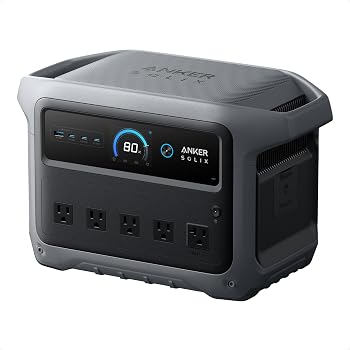
Anker SOLIX C1000 Gen 2 Power Station, 1024Wh, 2000W Solar Gen
Anker SOLIX C1000 Gen 2 recharges in 49 minutes and pushes 2,000W across ten ports.
- 1,024Wh LiFePO4 capacity with 10 output ports
- 2,000W output (3,000W peak) for high-draw appliances
- Full recharge in 49 min via 1,600W HyperFlash; solar-ready
1,024Wh LiFePO4 capacity.
2,000W (3,000W peak)—top-tier output for its size.
Full charge in 49 minutes via 1,600W input.

Anker SOLIX C300 Power Station, 288Wh LiFePO4, 300W Solar Gen
Compact 288Wh Anker C300 with three AC outlets, eight ports and 140W two-way fast charging.
- 288Wh LiFePO4; 300W output (600W surge)
- 8 ports including 3 AC outlets; 140W two-way fast charging
- 15% smaller than similar units; optional carry strap
288Wh LiFePO4 capacity.
300W (600W surge) across 8 versatile ports.
140W two-way fast charging.
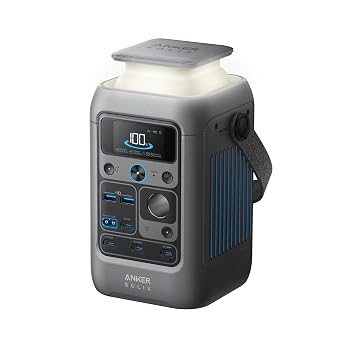
Anker SOLIX C300 DC Power Bank Station, 288Wh, 300W Solar Gen
Ultra-portable 288Wh Anker C300 DC that recharges from any USB-C charger for travel and camping.
- 288Wh LiFePO4 capacity; 300W output
- Recharges via an 18W+ USB-C wall charger (charger not included)
- 3-year battery guarantee; impact-resistant travel design
288Wh—compact carry-anywhere capacity.
300W for laptops, phones and small devices.
Fast two-way USB-C charging on the go.

Jackery Explorer 2000 v2 Power Station, 2042Wh, 2200W, Solar
Jackery's 2,042Wh home-backup unit—2,200W output in the lightest 2kWh class at 39.5 lb.
- 2,042Wh LiFePO4 home-backup capacity
- 2,200W AC output across 3 AC ports; USB-C PD 100W
- 0→80% in 66 min; just 39.5 lb for a 2kWh station
2,042Wh—large home-backup capacity.
2,200W across three AC ports.
0→80% in 66 minutes on AC.

Jackery HomePower 3600 Plus Power Station, 3584Wh, 3600W AC
Whole-home 3,584Wh backup pushing 3,600W (7,200W paired) and expandable to 21kWh.
- 3,584Wh LFP capacity; expandable up to 21kWh
- 3,600W AC output (7,200W in parallel) runs pumps and heaters
- High-temp ceramic-membrane cells; plug-and-play with MTS
3,584Wh—largest capacity here, expandable to 21kWh.
3,600W (7,200W paired)—runs heavy home loads.
Fast AC recharge plus high-watt solar input.

BLUETTI Elite 30 V2 Power Station, 288Wh, 600W, 10ms UPS
Lightweight 9.4-lb 288Wh unit with a true 600W output, 1,500W lift mode and 10ms UPS.
- 288Wh LiFePO4 in a 9.4-lb ultralight body
- 600W continuous, 1,500W Power-Lifting; 10ms UPS switchover
- UltraCell tech cuts standby draw ~50%; dual 140W/100W USB-C
288Wh LiFePO4 in a 9.4-lb body.
600W continuous, 1,500W lift—double many 288Wh rivals.
Fast AC charge with 10ms UPS for sensitive gear.
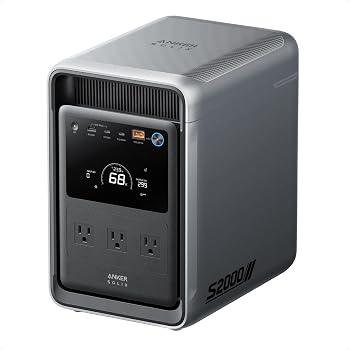
Anker SOLIX S2000 Power Station, 2010Wh LFP, 1500W Solar Gen
Anker S2000 packs 2,010Wh and a 10,000-cycle battery into the smallest, lightest 2kWh body.
- 2,010Wh LFP (314Ah cells); 10,000-cycle, 15-year lifespan
- 1,500W output; up to 35-hour fridge backup
- 30% smaller, 25% lighter than average 2kWh (~36 lb)
2,010Wh LFP with a 10,000-cycle lifespan.
1,500W output; ~35-hour fridge runtime.
Fast AC recharge with app-managed input.

MARBERO 88Wh Portable Power Station, 120W Peak, Solar Generator
Pocketable 88Wh backup with a real AC outlet that keeps phones and a fan alive in an outage.
- 88Wh lithium capacity; 120W peak AC output
- 8 output ports (AC/USB/DC) usable simultaneously
- 0→80% in ~2 hours; 6.5 x 4.6 x 3.1" book-size body
88Wh—smallest pack, for phones and small devices.
120W peak—light electronics, not big appliances.
0→80% in about 2 hours.
How to Choose the Best Portable Power Station
Two specs do the heavy lifting: capacity in watt-hours (Wh) tells you how long it runs your gear, while output in watts (W) tells you what it can run at once, so a 1,000Wh unit at 1,500W is very different from a 1,000Wh unit at 300W. Check the battery chemistry, as LiFePO4 cells last several times longer than older lithium and tolerate more charge cycles. Recharge speed matters too: fast AC charging and a high solar input mean less downtime, especially off-grid. Inventory the ports you need, including AC outlets, USB-C with high PD wattage, and 12V DC, and look for UPS or pass-through if you’ll back up sensitive electronics. Weight and handle design decide how portable it really is. Finally, weigh the warranty and cycle rating against the price. Match capacity and output to your actual loads, and the best portable power station covers outages, trips, and worksites alike.
How-To Guides
Picked with expertise
We know these categories well, so each pick reflects what actually matters — not just headline specs.
Used in real conditions
We run this gear in the garage and driveway, not just off a spec sheet.
Flaws left in
Ratings keep the downsides visible so you know the trade-offs before you buy.