
11.1V vs 14.8V Jump Starters: What Really Determines Starting Power?

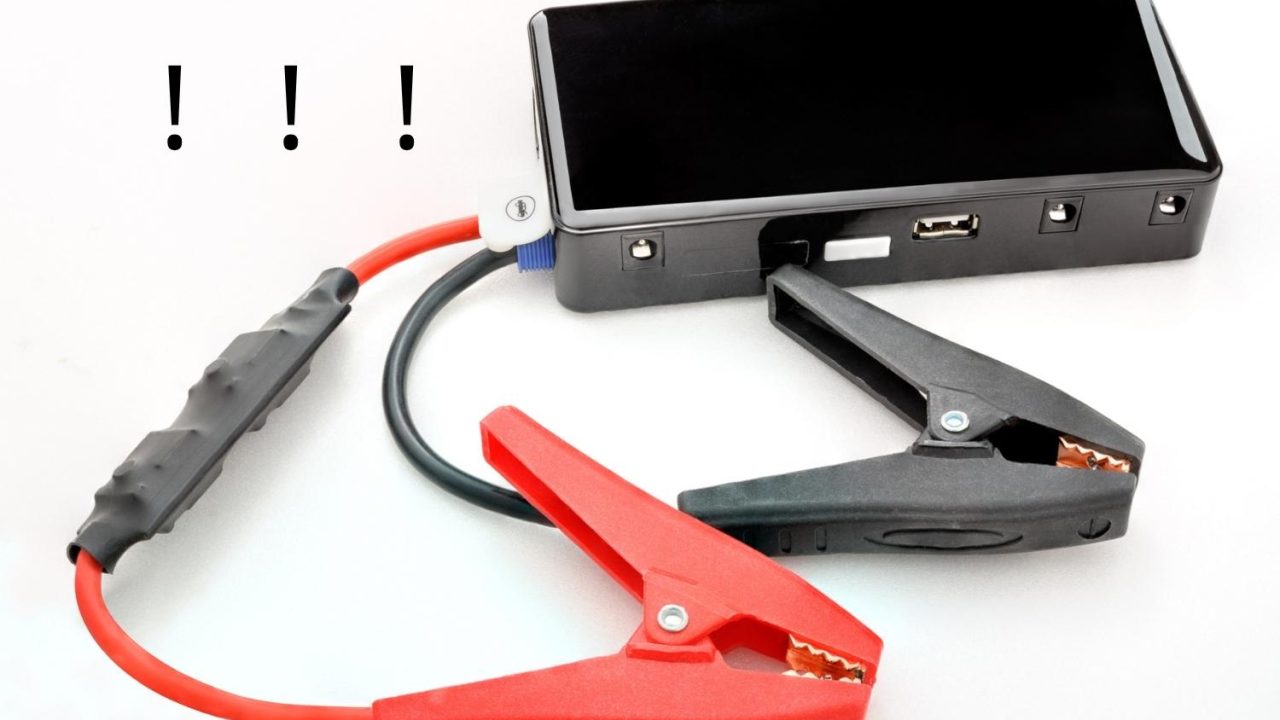
Peak amps dominate jump starter advertising, but that headline number does not tell you how well a portable booster will crank an engine. Jump starter voltage, cell discharge capability, internal resistance, state of charge, temperature, cable size, clamp quality, and protection circuitry all affect the power that reaches the starter motor.
Many lithium jump starters use either an 11.1V nominal battery pack made from three 3.7V cells in series, or a 14.8V nominal pack made from four cells in series. A 14.8V design can have a performance advantage, but higher nominal voltage does not automatically mean a better—or more dangerous—jump starter. The complete electrical design matters more than one specification.
Quick Answer: Is an 11.1V or 14.8V Jump Starter Better?
A well-designed 14.8V jump starter can maintain more voltage under a heavy cranking load and may deliver stronger starting performance. However, a high-quality 11.1V unit with low-resistance cells, a high discharge rating, thick cables, efficient clamps, and a capable battery management system can outperform a poorly engineered 14.8V model.
The important distinction is between battery-pack voltage and output voltage. The nominal voltage printed for the internal pack does not necessarily equal the voltage delivered continuously at the jumper clamps or a DC accessory port. Smart clamps, switching components, cable resistance, the vehicle battery, and the starter load all influence the voltage that appears in real use.
Why Lithium Jump Starters Are Often Rated at 11.1V or 14.8V
A typical lithium-ion cell has a nominal voltage of about 3.7V and reaches approximately 4.2V when fully charged, according to Texas Instruments. Connecting cells in series adds their voltage:
- 3S battery pack: 3 × 3.7V = 11.1V nominal; about 12.6V fully charged.
- 4S battery pack: 4 × 3.7V = 14.8V nominal; about 16.8V fully charged.
The “S” means series. Series wiring increases voltage while the cell capacity in amp-hours remains the same. Manufacturers can also place cells in parallel to increase capacity and current capability, so two jump starters with the same nominal voltage may still have very different power, runtime, size, and heat behavior.
Why a 14.8V Jump Starter Can Crank More Strongly
A starter motor is a high-power load. In simple terms, electrical power equals voltage multiplied by current. Starting with more pack voltage can give the system additional headroom as voltage falls under load.
That voltage sag is critical. Every cell, weld, circuit board, cable, and clamp adds resistance. When the starter demands a large current, resistance pulls the output voltage down and produces heat. A 14.8V pack may remain above the minimum useful cranking voltage longer than an otherwise similar 11.1V pack.
But “otherwise similar” is the key phrase. Cell chemistry and construction can outweigh nominal voltage. Panasonic describes its high-rate lithium-ion cells as combining high-current discharge with low internal resistance, while Molicel publishes both maximum discharge current and internal resistance for its power cells. Those are the kinds of engineering factors behind strong pulse performance.
Why Peak Amps Do Not Tell the Whole Story
A jump starter’s peak-amp claim is only one data point. It may represent a very short pulse under a manufacturer-selected test condition rather than the current maintained through a full engine-cranking event. Without the test voltage, duration, temperature, state of charge, and cutoff criteria, two peak-amp numbers are difficult to compare directly.
Professional equipment brands sometimes publish a second, more useful figure. For example, Clore Automotive lists its JNCPRO1 at 1,700 peak amps and 425 cranking amps. That distinction helps show why a product’s sustained or start-assist output can be more informative than its largest marketing number.
Real jump starter performance depends on all of the following:
- Pack voltage: The available electrical pressure before and during cranking.
- Cell discharge rate: How quickly the cells can safely release stored energy.
- Internal resistance: Lower resistance means less voltage sag and heat.
- Battery capacity: More watt-hours can provide longer cranking duration and more attempts.
- State of charge: A half-charged pack has less voltage and reserve than a full one.
- Temperature: Cold conditions increase resistance and reduce available power.
- Cables and clamps: Thin wire, weak jaws, and poor contact waste power.
- BMS and smart-clamp limits: Protection settings determine when the output activates or shuts down.
What Does a 10C or 20C Battery Discharge Rate Mean?
The C-rate describes current relative to battery capacity. In a simplified example, a 2Ah cell rated for 10C discharge can theoretically deliver 20A; at 20C, that becomes 40A. A jump starter may use multiple cells in parallel, so the complete pack can deliver more current than one cell.
High C-rate alone is not enough. Pulse duration, cell temperature, voltage cutoff, cooling, pack construction, and aging all matter. Molicel’s published cell data, for example, pairs current limits with internal resistance, discharge curves, and temperature conditions rather than presenting one isolated “C” number.
Most consumer jump starter brands do not disclose the exact cells or their discharge rating. That makes it hard to judge starting performance from the product page. A manufacturer that publishes start-assist current, watt-hours, supported engine sizes, cable specifications, operating temperature, and independent safety certification gives buyers a more complete basis for comparison.
Can a 14.8V Jump Starter Damage Vehicle Electronics?
Not simply because the internal battery pack is labeled 14.8V. A conventional 12V vehicle does not operate at exactly 12.0V. Interstate Batteries notes that system voltage commonly rises to approximately 13.7–14.7V with the engine running. Yuasa says voltage above 14.8V at normal temperature can indicate a fault on a conventional non-start-stop vehicle, while some modern regenerative start-stop systems may use about 15.2V.
A fully charged 4S lithium pack can reach about 16.8V internally. Whether that voltage reaches the vehicle—and for how long—depends on the jump starter’s topology, smart-clamp circuitry, load, and connection to the vehicle battery. A properly designed product intended for a 12V vehicle should manage that interface within its stated operating conditions.
Risk increases when the product is poorly designed, damaged, connected with reversed polarity, used on the wrong vehicle voltage, or forced into an override mode that bypasses protection. Clore’s safety guidance emphasizes matching the jump starter to the vehicle voltage, and NOCO warns that manual override disables its spark-proof and reverse-polarity protections.
Older vehicles are not automatically incompatible with 14.8V packs. Some older or modified vehicles may have sensitive aftermarket electronics, deteriorated wiring, poor grounds, or unusual manufacturer procedures. Check the vehicle owner’s manual before jump starting. If the manual limits booster use or specifies dedicated jump points, follow those instructions.
Be Careful With the “12V” DC Accessory Output
The DC port deserves separate attention because it can power an accessory for minutes or hours, not just assist a starter for a few seconds. Do not assume the accessory port exactly matches the nominal voltage of the internal battery pack.
Some outputs are regulated near 12V. Others follow the battery more closely. Clore’s official JNC325 information sheet, for example, identifies the product as a 12V power supply while specifying a 14.8V, 10A DC output. That may be acceptable for many automotive accessories designed to tolerate charging-system voltage, but it may exceed the limit of a sensitive device expecting tightly regulated 12V power.
Before connecting a refrigerator, pump, router, radio, memory saver, camera, lighting controller, or other 12V DC device, verify:
- The jump starter’s stated DC output voltage or voltage range.
- Whether the output is regulated or tracks the battery pack.
- The port’s maximum continuous current and power.
- The connector size and center-positive or center-negative polarity.
- The accessory’s permitted input-voltage range.
If the manual does not provide the information, ask the manufacturer before connecting the device. Do not rely on the words “12V outlet” alone, and do not improvise a direct connection to the internal battery.
Why the Battery Management System Matters
A lithium jump starter is a battery pack, a high-current power path, and a control system in one portable enclosure. The BMS and smart clamps help prevent a normal mistake from becoming a fire, damaged battery, or expensive electrical repair.
Useful protections include:
- Reverse-polarity protection.
- Short-circuit protection.
- Over-current protection.
- Over-voltage and under-voltage protection.
- Over-temperature protection.
- Backfeed protection after the engine starts.
- Cell balancing during charging.
- Timeout protection for repeated cranking attempts.
Look for model-specific certification rather than a certification logo used only in general marketing. UL 2743 is the safety standard for portable power packs, including products with a vehicle-booster function. UL has also issued warnings about counterfeit certification marks on some portable packs, so verify a listing when certification is a major reason for the purchase.
Should You Buy From an Established Jump Starter Brand?
Brand age is not proof that every model is excellent, but a long market history can improve the odds of traceable manuals, replacement cables, warranty service, and tested safety routines. It is reasonable to favor a company with at least several years of jump starter experience over an untraceable marketplace label.
- NOCO was founded in 1914 and has decades of battery-product experience.
- Clore Automotive was founded in 2001 and traces its professional jump starter brands back more than 50 years.
- GOOLOO says it entered the market in 2014 and specializes in portable jump starters and related energy products.
One industry reality is that the brand on the case may not be the factory that built it. Public patent records have identified Carku as the manufacturer of jump starters sold under multiple brand names, including listed GOOLOO models. That supports the broader point that large OEMs produce for many labels. It’s very likely that Carku company makes 90% of Chinese-brand jump starters on amazon,
Shared manufacturing also does not guarantee identical quality. Brands can specify different cells, cables, clamps, BMS limits, housings, inspection standards, and warranties even when products come from the same OEM.
How to Choose a Safer, Stronger Jump Starter
- Match the vehicle voltage. Use a 12V jump starter only on a 12V starting system unless the product explicitly supports another voltage.
- Check engine compatibility. Use the manufacturer’s gas and diesel limits as a starting point, not an absolute guarantee.
- Prefer useful output data. Look for cranking or start-assist current, watt-hours, cable gauge, temperature range, and jump duration.
- Inspect the safety design. Reverse-polarity, over-current, over-voltage, short-circuit, temperature, and backfeed protection all matter.
- Verify certification. Confirm that the specific model—not merely the brand—has the claimed safety listing.
- Read the override instructions before an emergency. Override modes can disable important protections.
- Check the DC port separately. Confirm voltage range, regulation, polarity, and current before powering accessories.
- Keep it charged. Recharge on the manufacturer’s schedule and check it before winter or a long trip.
Frequently Asked Questions
Is a 14.8V jump starter better than an 11.1V model?
It can offer more voltage headroom under load, but it is not automatically better. Cell discharge capability, internal resistance, battery capacity, temperature, cables, clamps, and protection circuitry can be equally important.
What is the full-charge voltage of an 11.1V jump starter?
A typical 3S lithium-ion pack is approximately 11.1V nominal and about 12.6V when fully charged, assuming cells that charge to 4.2V each.
What is the full-charge voltage of a 14.8V jump starter?
A typical 4S lithium-ion pack is approximately 14.8V nominal and about 16.8V when fully charged. The product’s clamp or accessory output may not equal that internal pack voltage.
Can high jump starter voltage damage an ECU?
Incorrect voltage, reversed polarity, voltage spikes, damaged equipment, or misuse of an override mode can damage vehicle electronics. A 14.8V internal pack rating alone does not establish that the ECU will receive an unsafe voltage. Use a reputable product, match the vehicle system, and follow both manuals.
Is peak amperage the most important jump starter specification?
No. Peak amps do not describe how long the current is available or how far the voltage falls under load. Starting current, watt-hours, internal resistance, cell discharge capability, temperature performance, and cable quality provide essential context.
Can I use a jump starter’s DC port for any 12V device?
No. Confirm the port’s actual voltage range, regulation, maximum current, connector, and polarity, then compare them with the accessory’s input limits. Contact the manufacturer when the manual is unclear.
Bottom Line
The 11.1V-versus-14.8V question matters, but it is only the beginning. A 14.8V jump starter can have stronger cranking potential because it begins with more voltage headroom. Real performance still depends on the cells’ discharge capability, internal resistance, capacity, state of charge, temperature, BMS limits, cables, and clamps.
Do not buy from the peak-amp number alone. Choose a model with transparent specifications, smart-clamp protection, model-specific safety certification, a clear manual, and a brand that can answer technical questions. If you also want an integrated tire inflator, see our guide to the best jump starters with an air compressor.
Related reviews
Tire Pressure in Cold Weather: Why Your PSI Drops When Temperatures Do
Tire Pressure in Cold Weather: Why Your PSI Drops When Temperatures Do Tire pressure in cold weather follows one stubborn…

Airing Down Tires for Off-Roading: Pressures, Technique, and the Fast Way Back Up
Airing Down Tires for Off-Roading: Pressures, Technique, and the Fast Way Back Up Airing down tires for off-roading is the…
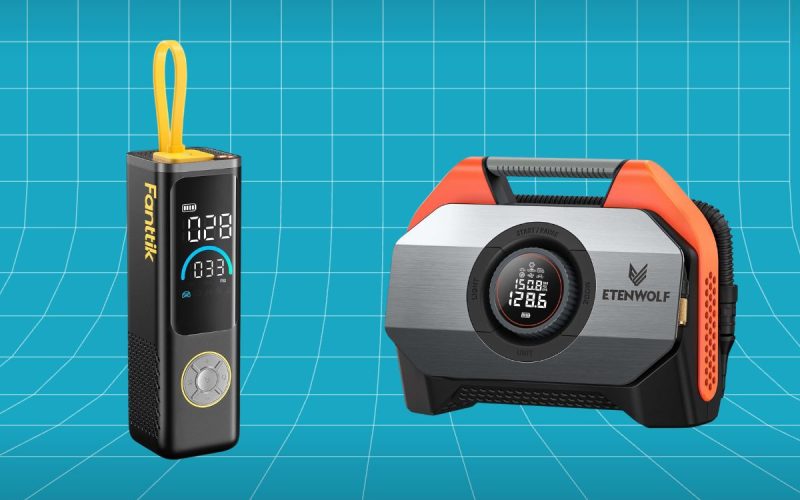
Fanttik X9 APEX vs ETENWOLF VORTEX S6: Premium Tire Inflator Showdown
Fanttik X9 APEX vs ETENWOLF VORTEX S6: Premium Tire Inflator Showdown The Fanttik X9 APEX vs ETENWOLF VORTEX S6 matchup…