
How to Clear Wet Leaves and a Large Yard Fast

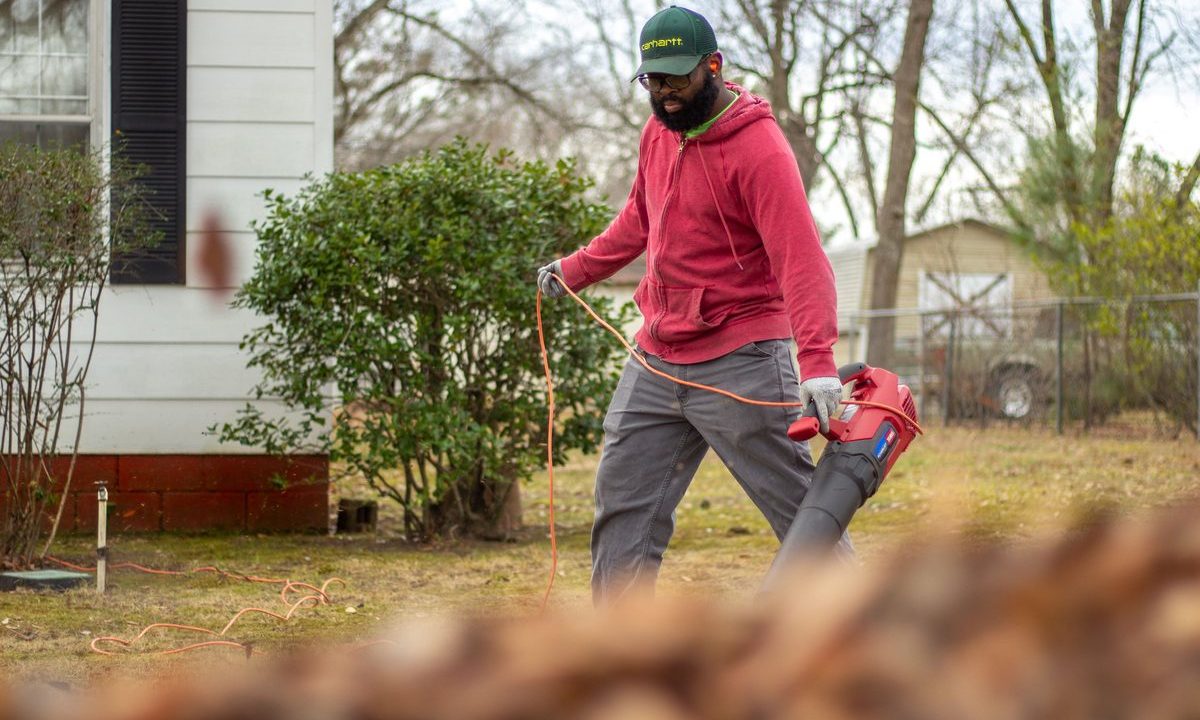
Matted and wet leaves are by far the biggest challenge in mowing lawns with them. The large clumps of matted material are often difficult to handle and tend to stick to your shoes and travel with you throughout the yard. Most people have a miserable afternoon of battling the wet material into piles, only to have the wind come and blow it all back down. Often, the method being used and the blower not having sufficient airflow to move the material are the reasons for this type of problem. However, with the right blower and a few tips and tricks, mowing a large, soggy yard can be a piece of cake.
Step-by-step: Clearing Wet Leaves
- Blower Air Speed (mph) and Volume (cfm) Requirements. High air speed is needed to effectively cut through wet material, while high volume is needed to move heavy material. If a blower is unable to dislodge a few wet, heavy clumps, then it does not have enough power to move such material.
- Work with the wind not against it. A light breeze is enough to work with when it is blowing in the same direction that you are walking. But if you are walking against a headwind then your work will be doubled.
- Blow the leaves in rows and then in piles within your yard sections. The entire yard does not have to be raked and moved all at once. Create the long windrows of leaves and then move them to piles within your yard sections. Hold blower nozzle at a slightly downward angle and use short bursts of air to keep the leaves under control.
- Mulch instead of bag when you can. A blower/vac with a mulcher such as the Stihl BL Autocahn shreds leaves to a fraction of their original volume. Shredded leaves can then be composted or used to feed the lawn and your beds instead of bagging them.
- Big yard? Plan your battery/fuel strategy. For cordless tools exchange empty for charged (or even 2 charged) – use highest voltage rated for tool. For gas blowers have mixed fuel on hand. A backpack style blower will save your back and prevent fatigue over long blowing sessions.
Safety tips: wear eye and ear protection, never blow debris toward people, roads, or windows, and watch your footing — wet leaves are slippery.
Pro Tips
- Technique beats brute force: rows + sections + wind is faster than max throttle everywhere.
- Angle the nozzle down and use bursts — you steer the leaves instead of scattering them.
- Mulching shrinks leaf volume dramatically — less bagging, and free nutrients for the lawn.
Common Problems & Fixes
- Leaves won’t budge → too wet or too little MPH. Let them dry a bit, or upsize the blower.
- Pile keeps scattering → too much throttle. Use short bursts and a lower angle.
- Battery won’t last the yard → carry spares, or move to backpack gas.
- Leaves blowing back at you → you’re fighting the wind. Reverse direction.
Related on GarageVetted
- Buying guide: Best Leaf Blower to Pick in 2026
- How to Clean Gutters With a Leaf Blower Safely
- How to Choose a Leaf Blower (CFM vs. MPH Explained)
Wet leaves are heavy and stick together, so raw air speed matters more than volume — a higher-MPH blower breaks wet leaves loose better than a gentle one. Work in small sections and push piles downwind rather than trying to move the whole yard at once. When wet leaves are too matted to blow, a mulching mower chops them into the lawn as free fertilizer. For safe leaf disposal and burning rules, check epa.gov.
Related reviews

11.1V vs 14.8V Jump Starters: What Really Determines Starting Power?
Peak amps dominate jump starter advertising, but that headline number does not tell you how well a portable booster will…

Airing Down Tires for Off-Roading: Pressures, Technique, and the Fast Way Back Up
Airing Down Tires for Off-Roading: Pressures, Technique, and the Fast Way Back Up Airing down tires for off-roading is the…

Fanttik X9 APEX vs ETENWOLF VORTEX S6: Premium Tire Inflator Showdown
Fanttik X9 APEX vs ETENWOLF VORTEX S6: Premium Tire Inflator Showdown The Fanttik X9 APEX vs ETENWOLF VORTEX S6 matchup…