
How to Use a Winch to Pull Your Truck or SUV Out

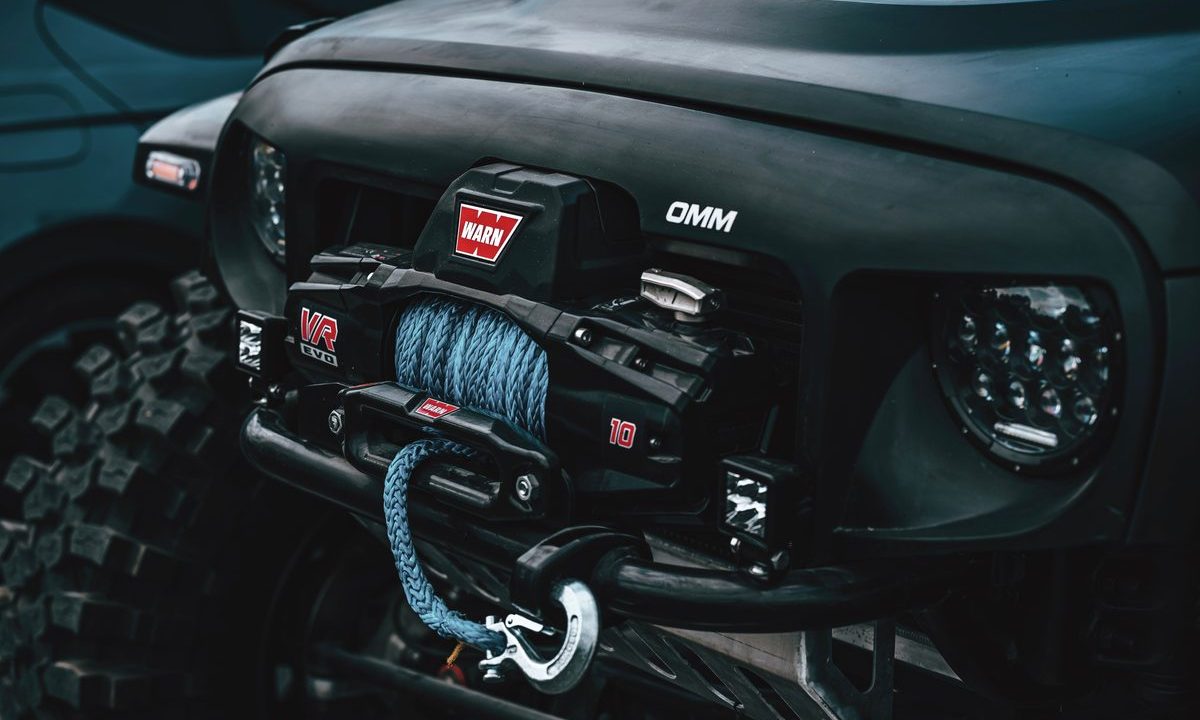
Recovery tools like winches have many ways to hurt you. A winch line under tension holds a great deal of energy. If you use the wrong size winch, wrong rated anchor for example, or place a bystander in the wrong location while loading up the winch, things can quickly go south. But used properly a winch is a slow, controlled, methodical pull.
Step-by-step: Using a Winch Safely
- Determine the proper winch size for your vehicle. Typically, capacity equals GVWR times 1.5. For this example, a ~5,000 lb GVWR vehicle would require an 8,000 lb winch. It is suggested to go up one size from calculated to avoid constant overheating and premature wear.
- Choose your line. Synthetic rope is light, easy to handle, does not develop sharp burrs, and when it fails it has the least amount of potential energy stored in it (safest)…it’s enemy is Abrasion. Steel cable is tougher and more Abrasion Resistant. Heavy. Stores lots of dangerous energy when it fails. Most overlanders choose synthetic rope for recovery in the field.
- Choose a good anchor and tie it up properly. A rated recovery point on another vehicle is a perfect anchor or use a tree-saver strap around the base of the tree and tie to a rated shackle. Bare rope around a tree is not strong enough and will fail.
- Rig for the pull. Lay out sufficient line so there are more turns on the reel to avoid overloading the line with excessive force and heat. Then route the line through a snatch block and back to your vehicle to increase pulling power, or reverse direction of pull. This will double your pulling power.
- Winch under control. Everyone must be out of the working area of the winch line. Put a damper on the winch line and retrieve line slowly in stages while engine is running and giving slight gas. Keep hands away from fairlead. Use remote to operate winch from safe distance. Wear gloves.
Safety tips: never straddle or stand over a loaded line; stay at least the line’s length away; always use a damper; and never let the last few wraps come off the drum — the line can pull free.
Pro Tips
- A snatch block isn’t just for doubling power — it lets you redirect a pull so you’re winching straight even when the only good anchor is off to one side.
- Too little cable on the drum reduces power and builds heat (the outer wraps pull weakest). Use a longer run or a snatch block for tough pulls.
- Synthetic rope needs a fairlead and sleeve to survive dragging over rock — protect it from abrasion or it fails early.
Common Problems & Fixes
- Winch bogs down or overheats → undersized, or the drum is nearly full. Double-line with a snatch block and let it cool.
- Rope pulls off the drum → too few wraps left. Always keep several.
- Anchor slipping or tree damaged → use a tree-saver strap and a rated point.
- Pull is sideways → redirect through a snatch block so you pull in line.
Related on GarageVetted
- How to Choose Tow Straps vs. Recovery Straps (Don’t Mix Them Up)
- How to Safely Recover a Stuck Vehicle (Mud, Sand, and Snow)
Never rig a winch to a bumper bracket — use a rated recovery point and a tree-saver strap on a solid anchor. Lay a heavy blanket over the winch line so a snapped synthetic rope drops instead of flying, and keep bystanders well clear of the pull path. Use a snatch block to double your winch pulling power when the vehicle is badly stuck. For recovery-gear safety basics, see osha.gov.
Related reviews
11.1V vs 14.8V Jump Starters: What Really Determines Starting Power?
Peak amps dominate jump starter advertising, but that headline number does not tell you how well a portable booster will…
What PSI Should Car Tires Be? The Right Pressure for Every Vehicle
What PSI Should Car Tires Be? The Right Pressure for Every Vehicle What PSI should car tires be? For most…
Can You Overinflate a Tire? Max PSI vs Recommended PSI, Explained
Can You Overinflate a Tire? Max PSI vs Recommended PSI, Explained Can you overinflate a tire? Yes — easily, and…