
Tire Inflator Specs Decoded: PSI, CFM, Duty Cycle & Speed Claims

Tire Inflator Specs Decoded: PSI, CFM, Duty Cycle & Speed Claims
Tire inflator specs are written to be skimmed, not understood — a wall of “150 PSI! 4X faster! 35 L/min!” that makes every pump sound identical and heroic. After researching spec sheets across the entire category for our reviews, we can tell you which numbers predict real-world satisfaction, which are technically true but measured under lab-friendly conditions, and which are pure decoration. This is the decoder ring; ten minutes here makes every product page in the category legible.
Max PSI: The Most Overrated Number on the Box
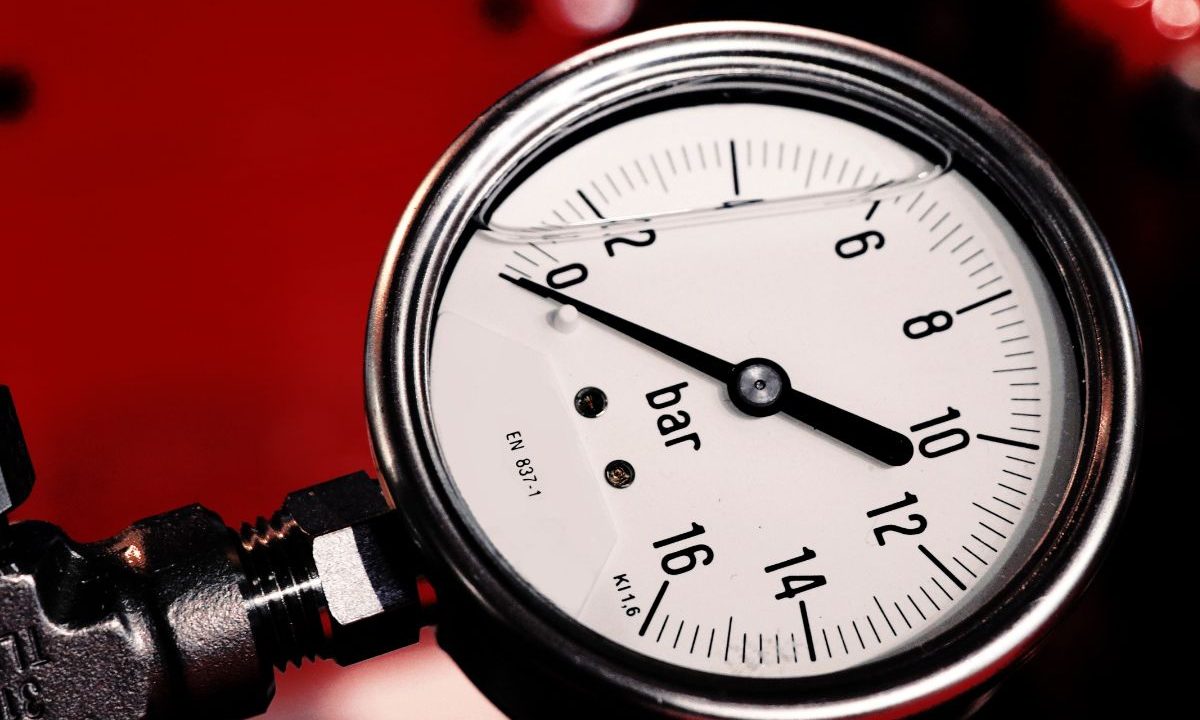
PSI (pounds per square inch) is pressure — how hard the pump can push, not how much air it moves. Nearly every serious unit is rated 120–160 PSI, and nearly every buyer needs far less: passenger tires run 32–36 PSI, light trucks up to 80, road bikes 80–110, RVs up to ~110 (your exact target lives on the door jamb — see our what-PSI guide).
So why do ceilings differ between a 150 and 160 PSI unit? Headroom. A pump grinding at 90% of its ceiling fills slowly and runs hot; one loafing at 40% stays quick. Treat max PSI as a pass/fail spec — your highest-pressure tire plus ~50% margin — and stop paying extra for it beyond that.
Airflow (L/min or CFM): The Real Speed Spec, with an Asterisk
Airflow — liters per minute or CFM — measures volume moved per minute, and it’s what actually determines fill time. The asterisk: manufacturers measure it at zero or near-zero back-pressure. As the tire fills and resists, flow drops — sharply near a pump’s ceiling. Two units rated “35 L/min” can behave very differently at 70 PSI in a truck tire. This is why we treat airflow claims as comparable within a brand’s lineup but soft between brands, and why duty cycle (below) is the better tell for heavy work.
Duty Cycle: The Spec That Separates Tools from Toys
Duty cycle is how long a pump can run before it must rest — expressed as minutes-on/minutes-off or as a percentage over a window (the concept is summarized in the duty cycle reference). A compact pump with a short duty cycle tops off one sedan tire happily, then hits thermal cutoff halfway through a four-corner session and sits there cooling while you wait.
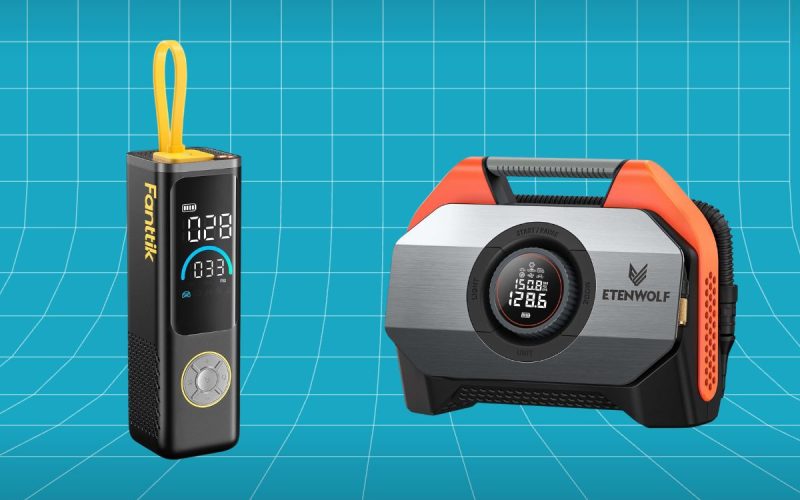
Buyers with big tires should make this the first spec they check: it’s the entire reason the ETENWOLF VORTEX S6 — dual cylinders, rated 100% duty cycle — anchors our truck and SUV ranking. If a listing omits duty cycle entirely, assume “short.”
“Inflates in 35 Seconds!” — Reading Speed Claims Honestly
Speed claims are real measurements of carefully chosen scenarios — usually a modest top-off (say, 30→36 PSI) on a mid-size tire. The Fanttik X9 APEX carries a 35-second fast-inflation rating and genuinely is one of the quickest units we’ve researched; just understand the number describes a top-off, not zero-to-full on a flat. Rules of thumb from our research: a healthy top-off takes seconds-to-a-couple-minutes on cars; a near-flat passenger tire takes several minutes on a good pump; big truck tires take longer and punish weak duty cycles. Any claim without a stated start/end pressure is marketing, not measurement.
Battery Capacity (mAh): Useful, Within One Voltage
Milliamp-hours indicate runtime per charge — the VORTEX S6’s 19,200mAh dwarfs pocket units’ cells, and it shows in tires-per-charge. Two cautions: mAh comparisons only hold at the same battery voltage (energy is voltage × capacity), and cold weather cuts delivered capacity regardless of the number — timing that couldn’t be worse, as our cold-weather PSI guide explains. Swappable-pack designs like the AstroAI Cordless 20V sidestep the whole anxiety.
Gauge Accuracy & Auto Shut-Off: The Specs That Protect You
Digital gauges on quality units are typically spec’d around ±1 PSI — tighter than the abused dial at the gas station. The feature that converts accuracy into safety is auto shut-off: set the target, walk away, no overshoot. We consider it non-negotiable on any 2026 purchase; overinflation’s real costs are covered in our overinflation guide.
The 60-Second Spec Checklist
- Max PSI: your highest-pressure tire + 50% headroom. Pass/fail, nothing more.
- Airflow: higher is faster, but trust it only as a rough comparator.
- Duty cycle: the honest workhorse spec — critical for trucks, trailers, multi-vehicle sessions.
- Speed claim: valid only with stated start/end pressures.
- Battery mAh: compare within a voltage class; charge seasonally.
- Auto shut-off + digital gauge: mandatory.
Bottom Line
Spec sheets reward the one buyer in a hundred who knows PSI is table stakes, airflow is conditional, and duty cycle is character. Now that you’re that buyer, our best tire inflators ranking reads like an open book — every pick annotated with exactly these numbers and what they mean for your driveway.
Related reviews
11.1V vs 14.8V Jump Starters: What Really Determines Starting Power?
Peak amps dominate jump starter advertising, but that headline number does not tell you how well a portable booster will…
Fanttik X9 APEX vs ETENWOLF VORTEX S6: Premium Tire Inflator Showdown
Fanttik X9 APEX vs ETENWOLF VORTEX S6: Premium Tire Inflator Showdown The Fanttik X9 APEX vs ETENWOLF VORTEX S6 matchup…
What PSI Should Car Tires Be? The Right Pressure for Every Vehicle
What PSI Should Car Tires Be? The Right Pressure for Every Vehicle What PSI should car tires be? For most…