
How to Remove Stuck or Over-Torqued Lug Nuts With an Impact Wrench

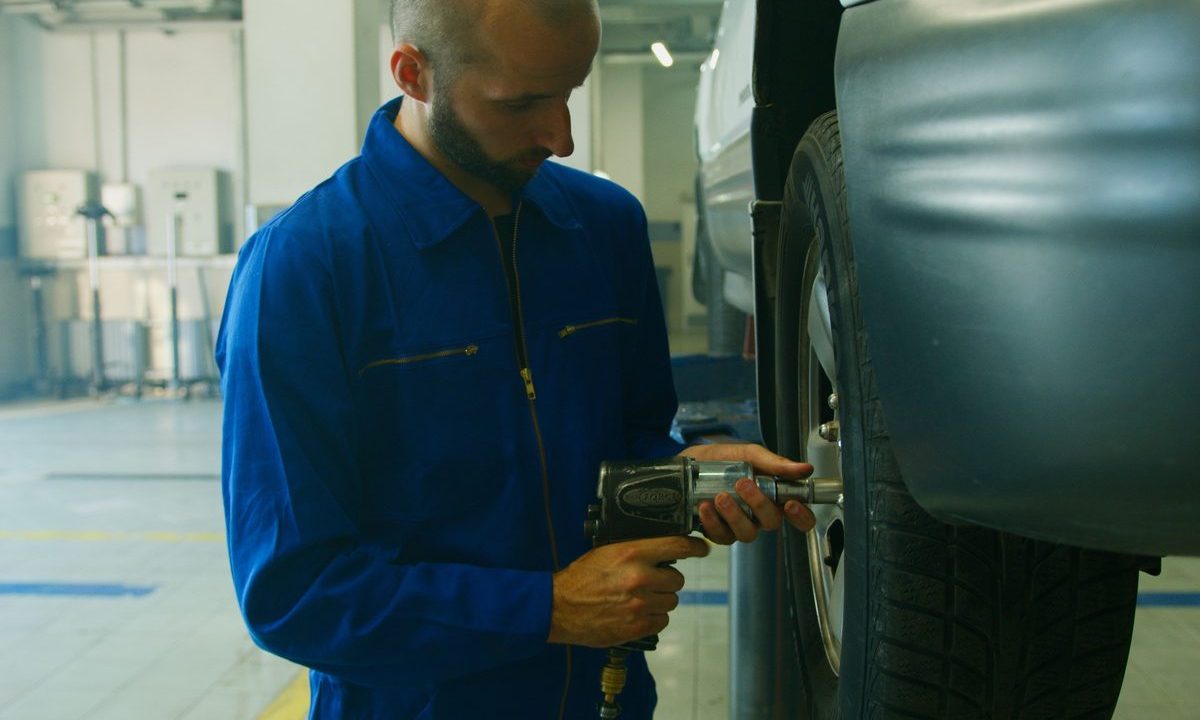
Some of the hardest items to remove in a vehicle during repair are lug nuts. Whether they have been stuck for years by rust, or have been extremely over torqued by a shop with an air gun, stuck lug nuts can pose many problems to someone trying to remove them. If a stuck lug nut is attempted to be removed the wrong way, the nut can be stripped, the stud can break off, or the breaker bar can slip and bounce back and cause serious injury. In order to loosen and remove a stuck lug nut quickly, an impact wrench with sufficient breakaway torque, and the correct size socket to fit over the lug nut, should be used. In a matter of seconds, the lug nut can be removed with the correct tools.
Step-by-step: Removing a Stuck Lug Nut
- Understand why they seize. Rust bonds the threads, and shops routinely overtighten with air guns well past the ~80–100 ft-lb spec. That’s why a hand wrench often can’t crack them.
- Use enough breakaway torque. A 1/2″ impact wrench with at least ~300 ft-lbs handles most lug nuts; many make 500–700+ for stubborn ones. Breakaway (nut-busting) torque, applied for a few seconds, is what breaks the bond.
- Hand use of impact rated sockets instead of chrome hand sockets. Thicker impact rated sockets absorb more shock in use than chrome hand sockets. These can break apart resulting in severe injury. Use only the correct size to avoid rounding of nut.
- Loosen it — add penetrating oil or heat for the worst. Loosening a stuck nut or bolt is achieved using a wrench set on reverse. Seat the socket fully on the nut or bolt then deliver the impacts to loosen. If required to loosen a nut or bolt then penetrating oil can be added. Allow the oil to penetrate for 15–20 minutes and repeat if necessary. Also, use of heat on worst cases by carefully applying heat to the nut for around 30 seconds to allow to cool then try to loosen.
- Reinstall to spec – don’t re-impact tight. First thread nuts on by hand to avoid cross threading. Use a star pattern to tighten nuts on bolts in a sequential manner. Tighten bolts to manufacture’s specified torque value on the ground using a torque wrench. Do not use an impact to final torque bolts.
Safety tips: chock the wheels, use jack stands (never just a jack), impact sockets only, and eye protection — keep fingers clear of the socket.
Pro Tips
- Impact sockets are non-negotiable — a chrome socket shattering at 500 ft-lbs is a real injury risk.
- Penetrating oil + time beats brute force on rusted nuts; let it soak while you set up.
- Break them loose on the ground (weight still on the tire) before jacking, so the wheel doesn’t spin.
Common Problems & Fixes
- Nut rounds off → wrong size or worn socket. Use an exact-fit impact socket, or a lug-nut extractor.
- Won’t break loose → not enough breakaway torque, or seized. Soak with oil/heat, or use a breaker bar with a cheater pipe.
- Stud snaps → over-rusted/over-torqued; the stud must be replaced.
- Wheel spins while loosening → break the nuts before jacking the car up.
Related on GarageVetted
- Buying guide: Best Cordless Impact Wrench to Pick in 2026
- How to Choose an Impact Wrench (Torque and Drive Size for Your Jobs)
- How to Avoid Stripping or Over-Tightening Bolts With an Impact Wrench
If a stuck lug nut still won’t move, stop before you round it off. Let penetrating oil soak, then use an impact-rated socket so the impact wrench delivers full breakaway torque to the stuck lug nut. For torque specs and safe wheel service, see the tire guidance at nhtsa.gov/equipment/tires.
Related reviews
11.1V vs 14.8V Jump Starters: What Really Determines Starting Power?
Peak amps dominate jump starter advertising, but that headline number does not tell you how well a portable booster will…
What PSI Should Car Tires Be? The Right Pressure for Every Vehicle
What PSI Should Car Tires Be? The Right Pressure for Every Vehicle What PSI should car tires be? For most…
Can You Overinflate a Tire? Max PSI vs Recommended PSI, Explained
Can You Overinflate a Tire? Max PSI vs Recommended PSI, Explained Can you overinflate a tire? Yes — easily, and…