
Tire Inflator vs Air Compressor: Which One Do You Actually Need?

Tire Inflator vs Air Compressor: Which One Do You Actually Need?
The tire inflator vs air compressor question trips up almost everyone shopping for their first inflation tool, and the confusion is understandable — retailers use the two names almost interchangeably. But after researching dozens of units across both categories for our reviews, we can tell you the difference matters a lot more than the naming suggests. Buy the wrong one and you’ll either lug a 30-pound machine around for a job a one-pound gadget handles, or stand in your driveway waiting on a tiny pump that was never designed for your equipment.
Here’s the short answer: a tire inflator is a small, tankless pump built to top off tires and inflatables. An air compressor stores pressurized air in a tank so it can also run tools like nailers and impact wrenches. Most drivers only need the first one. Below, we break down when each makes sense.
What a Tire Inflator Is Built For
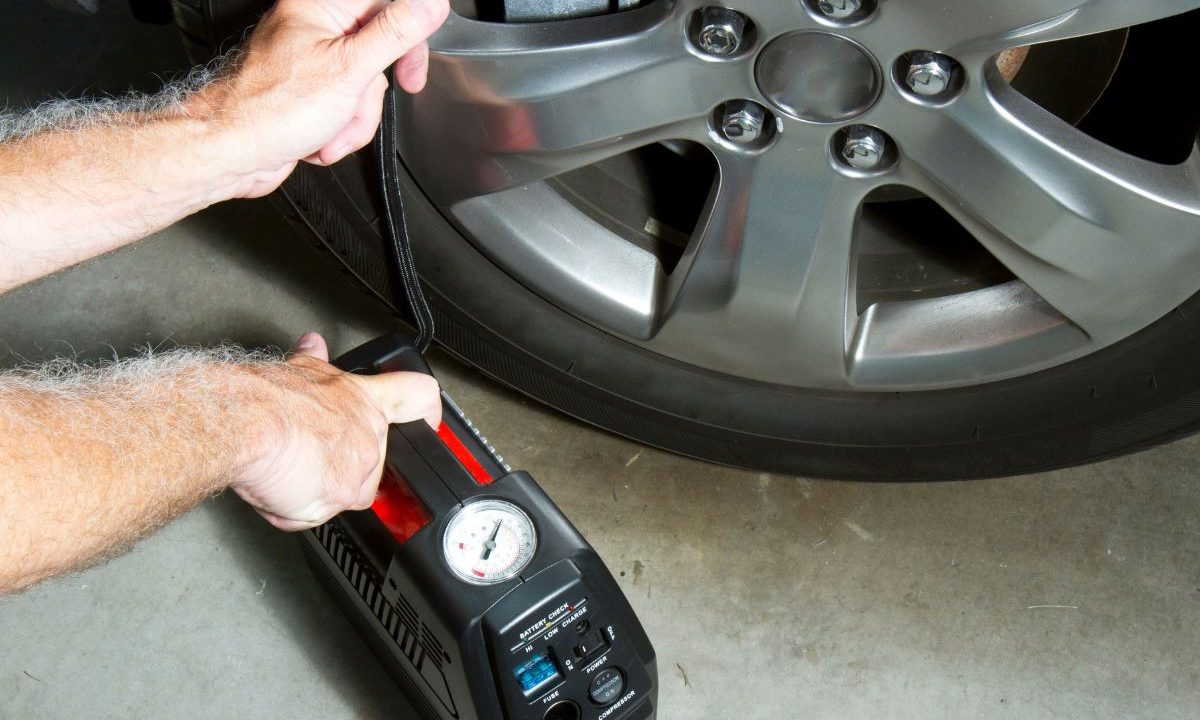
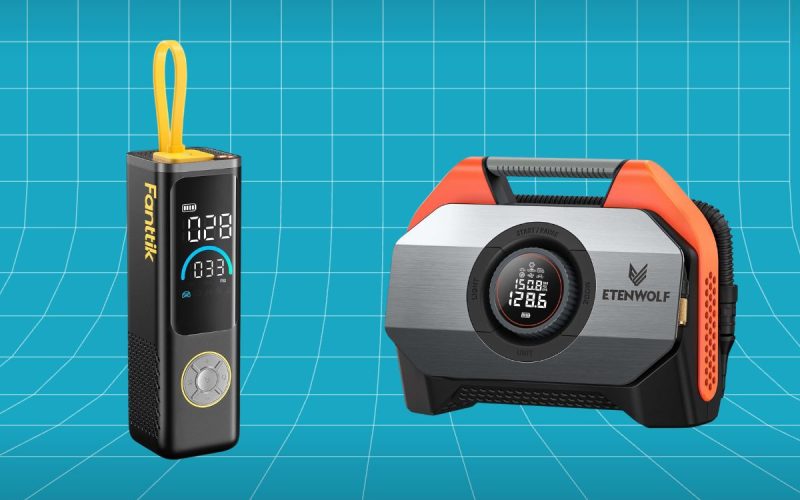
A portable tire inflator is a compact electric pump — powered by your car’s 12V socket, a wall outlet, or an internal battery — that pushes air directly into whatever you attach it to. There’s no tank. Modern units like the Fanttik X9 APEX we ranked among our top picks are rated to 150 PSI, fit in a glovebox, and include digital gauges with auto shut-off so you dial in a target pressure and walk away.
What they handle well:
- Topping off car, SUV and light-truck tires. Bringing a tire from 26 to 35 PSI is exactly the job these are engineered for.
- Bikes, motorcycles, and sports gear. Most include needle and presta-style adapters.
- Roadside emergencies. They live in the trunk. A garage compressor can’t help you on the shoulder of a highway.
What they can’t do: run air tools, fill truly high-volume items quickly (think large air mattresses to full firmness), or inflate all day without rest — most consumer units need cool-down breaks, a spec called duty cycle that we explain in our guide to tire inflator specs.
What an Air Compressor Is Built For
A true air compressor — the pancake or hot-dog style unit you see in garages — pumps air into a storage tank, typically 1 to 6 gallons for consumer models. The tank is the whole point: it delivers a large burst of airflow on demand, measured in CFM (cubic feet per minute), which is what air tools need.
A 6-gallon pancake compressor like the Bostitch we’ve researched for our garage-tool coverage makes sense when you:
- Run air tools. Brad nailers, staplers, blow guns — anything that drinks CFM.
- Work in one place. These weigh 20–35 pounds and need a wall outlet. They’re shop equipment, not trunk equipment.
- Inflate constantly. A tank plus a quick-connect chuck tops off four tires faster than any handheld once it’s charged up.
The trade-offs are real, though: they’re loud (often 80+ decibels), bulky, need occasional tank draining to prevent internal rust, and cost more than most dedicated inflators.
The Core Differences, Side by Side
- Tank: inflators have none; compressors store 1–6+ gallons of pressurized air.
- Portability: inflators run 1–3 pounds; pancake compressors run 20–35 pounds.
- Power: inflators use 12V sockets, batteries, or wall power; compressors are almost always 110V wall power.
- Airflow: compressors deliver far more CFM, which matters for tools and high-volume inflatables — much less for car tires.
- Noise: inflators hum; tank compressors roar.
- Price: quality inflators are frequently cheaper than quality tank compressors.
One spec that surprises people: maximum PSI is similar on both (around 150 PSI), because a car tire only needs 32–36 PSI anyway, as the NHTSA’s tire safety guidance explains. The difference was never about pressure — it’s about air volume and what the machine is designed to keep up with.
Which One Do You Need? Three Honest Scenarios
You’re a commuter who wants safe tires and no hassle
Get a portable tire inflator, full stop. It handles the TPMS light on a cold morning, lives in the trunk for emergencies, and costs less. Start with our ranked list of the best tire inflators we’ve vetted this year.
You DIY around the house but don’t own air tools
Still the inflator. The only reason to accept a compressor’s bulk is CFM for tools you don’t have. If a nail gun is genuinely on your horizon, buy the compressor when the nail gun arrives — not before.
You run a garage workshop or air tools
Buy the tank compressor for the shop — and honestly, consider a small inflator for the car anyway. The compressor can’t ride along, and the pair covers every situation between them. Our guide to compressor sizing walks through how big a tank you actually need.
Can a Tire Inflator Replace an Air Compressor?
For tires and inflatables — yes, completely. Heavy-duty cordless models like the ETENWOLF VORTEX S6, with its dual-cylinder design built for sustained runtime, have closed most of the speed gap on passenger tires. For air tools — no. Without a tank there’s simply no CFM reserve, and no handheld unit will drive a framing nailer.
Bottom Line
Choose a tire inflator if your world is tires, bikes, balls, and the occasional air mattress — that’s the vast majority of drivers. Choose an air compressor only if air tools or a fixed workshop are part of the picture. And if you’re now leaning toward the inflator, our full tire inflator buying guide covers the corded-versus-cordless decision, the specs worth paying for, and the ones that are pure marketing.
Related reviews
11.1V vs 14.8V Jump Starters: What Really Determines Starting Power?
Peak amps dominate jump starter advertising, but that headline number does not tell you how well a portable booster will…
Fanttik X9 APEX vs ETENWOLF VORTEX S6: Premium Tire Inflator Showdown
Fanttik X9 APEX vs ETENWOLF VORTEX S6: Premium Tire Inflator Showdown The Fanttik X9 APEX vs ETENWOLF VORTEX S6 matchup…
What PSI Should Car Tires Be? The Right Pressure for Every Vehicle
What PSI Should Car Tires Be? The Right Pressure for Every Vehicle What PSI should car tires be? For most…